


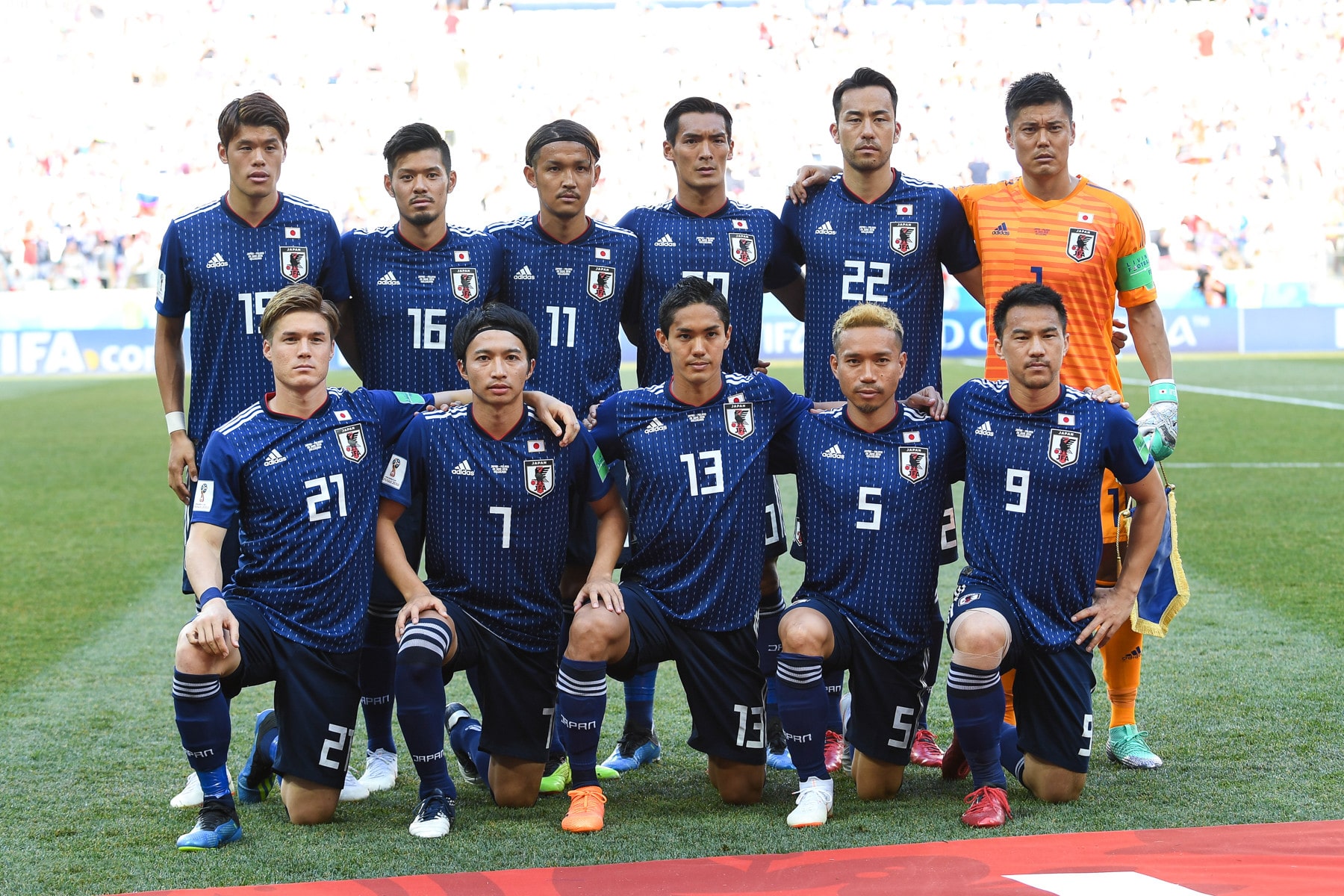
Which areas will Japan target?
Both nations featured in our Japan vs. Sweden prediction made a strong impression to kick off the World Cup finals. They did so in completely different ways. The Blue-and-Yellows bombarded the Tunisian goal from all angles, scored three long-range goals, and celebrated a 5-1 opening victory. Their subsequent performance on the second matchday against the Netherlands (1-5) put a massive damper on the euphoria. Furthermore, the in-depth statistics in our Japan vs. Sweden prediction, as well as in the AI analysis, suggest that Tre Kronor is likely to face a few more challenges.
The Japanese team entered the World Cup stage not with a bang, but with a steady, almost eerie rhythm. First came the 2–2 draw against the Netherlands—trailing twice, coming back twice. Then came the 4–0 win over Tunisia—the most goals ever scored by an Asian team in a World Cup match.
After two matchdays, Japan has four points, while Sweden has three. The standings say: Japan only needs a draw, while Sweden needs a win. But this match is bigger than the math suggests. It’s a clash between two different ways of thinking about soccer.
The strength of the Samurai Blue had already been hinted at in the run-up to the World Cup during the friendly matches. Scotland was shut out (1–0), as were England (1–0) and Iceland (1–0). Then came the first two group stage matches of this World Cup, in which a total of six goals were scored.
Sweden, on the other hand, revealed recurring difficulties in balancing attack and defense—and not just against the Netherlands (1–5). We’re basing our strategy on this, taking Japan vs. Sweden odds of 1.85 at Betano and betting on “Japan Over 1.5 Goals.”
Japan vs. Sweden AI Prediction
On good days, the Swedish team is carried by its two forwards. Alexander Isak and Viktor Gyökeres both play for top clubs in the Premier League and are excellent finishers. According to its Japan vs. Sweden AI prediction, our artificial intelligence expects them to have a less-than-stellar day. While many bookmakers are predicting a match with goals from both sides, the AI identifies a 7% value profit for a bet on “Both Teams to Score – No.” 51% of its simulations ended with neither side scoring—and the Swedish team tended to come away empty-handed more often.
Japan – Stats & Current Form
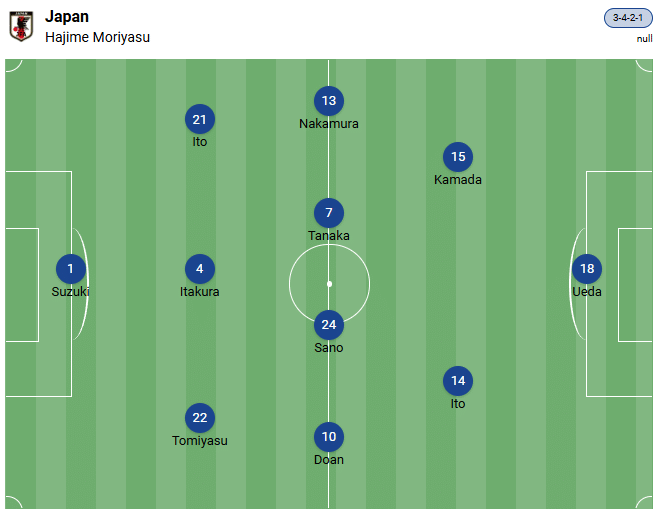
Japan isn’t just good in this tournament. Japan is hard to pin down. Hajime Moriyasu’s team moves like water: it can flow, press, evade, and suddenly accelerate. The basic formation is usually a 3-4-2-1, but it’s less of a rigid system and more of a starting point for constant shifts.
Ritsu Doan and Keito Nakamura aren’t classic wingbacks, but rather attacking players in a role that assigns them defensive duties without dampening their attacking instincts. The wingers rotate, the forwards hold the line, the central midfielders press forward—and as soon as the opponent plays a pass too slowly, the entire dynamic shifts.
This was already evident against the Netherlands. Japan came back late, with Daichi Kamada scoring in the 88th minute—Japan’s latest World Cup goal ever. It was a goal from a set piece, but also a goal born of perseverance. Japan doesn’t fade out of games. The Samurai Blue don’t wait passively. They build on small moments until one becomes big enough.
Different Timing Isn’t a Problem for Japan
Against Tunisia, Japan didn’t have to wait. The Asian side struck immediately. After 3:27 minutes, Kamada scored again—this time off an assist from Nakamura. Ayase Ueda later added one of those finishes that momentarily silence a stadium: from distance, hard, clean, without any flourish.
After that, their control turned into a masterclass. Ueda set up Junyoa Ito’s goal with a delicate pass. It was an attack that began with goalkeeper Zion Suzuki and found the back of the net 28 seconds later. Later, Ueda headed in another goal. Four goals while allowing only two shots on goal.
A closer look at the numbers reveals even more. Only the Netherlands has a higher shot conversion rate (35.0 percent) than Japan (28.57 percent) so far. You can’t really call this luck. An expected goals per shot of 0.13 points to high-quality finishing.
Sweden – Statistics & Current Form
Japan doesn’t need much space. But if you give the Samurai Blue room, they quickly become dangerous. After the match against the Netherlands, Sweden saw exactly what giving up space can cost. The 1–5 loss wasn’t that lopsided because Sweden had nothing to offer.
On the contrary: Potter saw his team finish with 16 shots—more than the Netherlands. But the Oranje had the better chances, found the dangerous zones with greater determination, and attacked the Blue-and-Yellows’ final third via simple routes.
The xG ratio of 2.47:0.99 reveals the truth behind the shot count. Sweden was active but vulnerable. Dangerous, but open. Talented, but not stable. Their shot conversion rate so far stands at 20.7 percent—just under eight percentage points below that of the Samurai Blue.
There’s a structural problem with the Swedes
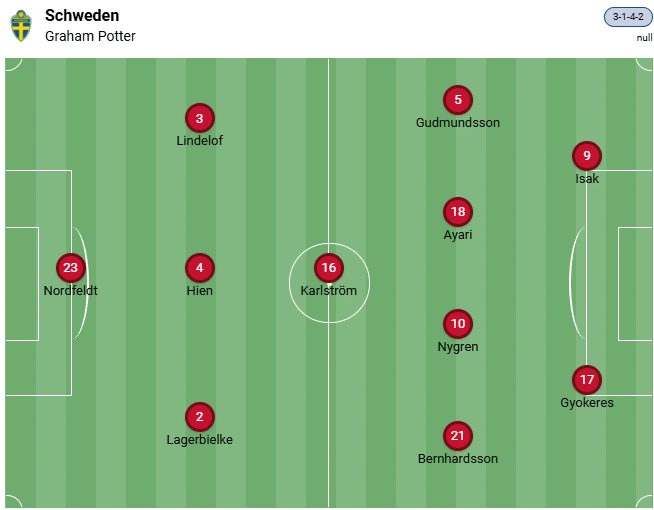
The start of the match against the Netherlands was particularly revealing. Graham Potter stuck with his 5-3-2 formation, with Isak and Gyökeres up front together. On paper, that sounds like a luxury. Two strikers that many nations would love to have as their clear-cut number one. Isak, who glides between the lines with subtle movements. Gyökeres, who keeps defenders busy, opens up space, and forces shots on goal.
But against the Netherlands, this luxury turned into a structural problem. Sweden lacked players on the wings. Denzel Dumfries and Micky van de Ven were left unmarked time and again. Brian Brobbey tied up the center backs, Cody Gakpo found space, and low crosses became a weapon.
After 17 minutes, the score was 0–2. It wasn’t that Sweden lacked quality.
Sweden simply lacked control. Potter reacted during the water break, switching to a 4-5-1 formation, and the Blue-and-Yellows suddenly found some breathing room. The question ahead of the match against Japan isn’t: Is Sweden good enough? But rather: Which version of Sweden will take the field? Regardless, the odds against Japan seem set too high for the Northern Europeans.
Japan – Sweden Head-to-Head Record
Sweden has won two of the five previous meetings (2 draws, 1 loss), but lost the only competitive match between the two sides. At the 1936 Olympic Games, Japan won the first recorded match against Sweden, securing a 3-2 victory. This was followed by four winless friendly matches for the Samurai Blue. However, the H2H record does not have a major impact on the upcoming Japan vs. Sweden prediction.
Japan – Sweden Prediction
The match could feel like a shift in states of matter. At times compact, at times open. At times technically refined, at times physically intense. Japan will try to control the rhythm without slowing down the pace of the match. Sweden aims to turn a few moments into big plays.
Both teams have scored six goals so far in the tournament. Defensively, however, Japan is much stronger, having won four of five international matches in the 2026 calendar year without conceding a goal. The Swedish team, on the other hand, has kept only one clean sheet since the beginning of 2025.
Japan has participated in every World Cup since 1998, repeatedly coming close to the next step, repeatedly on the brink of making history. The start of this World Cup has shown that the Samurai Blue are well on their way to achieving a long-standing goal: finally advancing beyond the Round of 16. If my Japan vs. Sweden prediction—that Japan will score at least two goals—comes true, it should give them a major confidence boost!

