


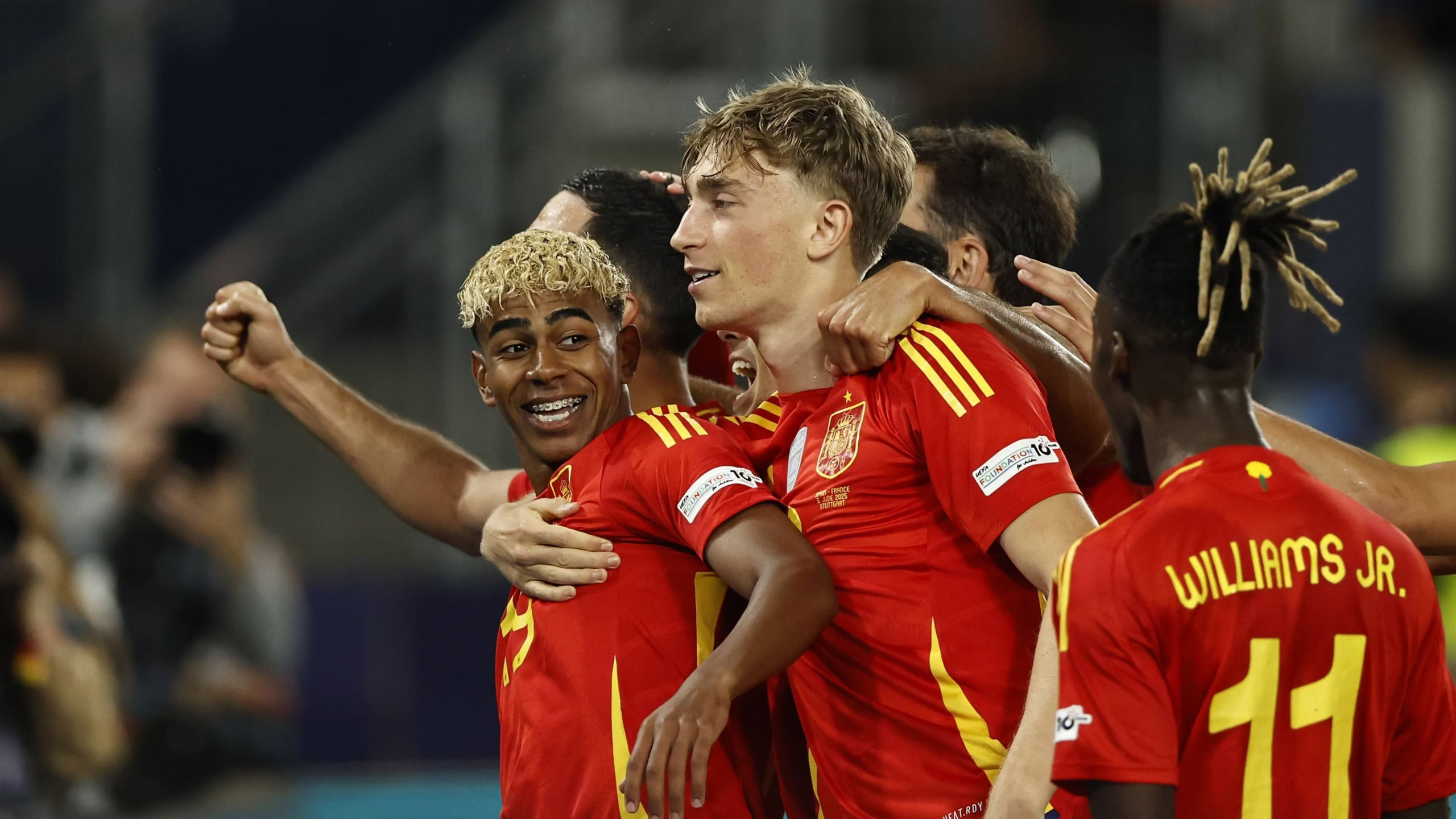
Will Belgium Break Spain’s Dominance?
It sounds like a showdown between two European soccer powerhouses, each with very different tournament stories in this Spain vs. Belgium matchup. The reigning European champions are traveling to Los Angeles with an almost uncanny calm and are the clear favorites in the Spain vs. Belgium prediction. Five games, no goals conceded, a historic defense, controlled dominance. Luis de la Fuente has built a team that not only plays beautifully but also shows clear advantages in the AI analysis.
Belgium’s path to the quarterfinals of the 2026 World Cup has been far more bumpy. Rudi Garcia’s team looked sluggish for long stretches of the group stage. Many sequences, attacks, and passing sequences appeared tenacious—almost like a team that had clung to its “golden generation” for too long.
Then came the knockout stage. First, there was the crazy comeback against Senegal, when Belgium turned a 0–2 deficit into a 3–2 victory in extra time just before the final whistle. Then came the 4–1 win over the U.S., in which Kevin De Bruyne wasn’t even needed. Suddenly, Charles De Ketelaere became the face of a new era for Belgium in the tournament.
The Red Devils’ performances so far have not been consistent. Most recently, Rudi Garcia’s squad did at least discover that they can be dangerous even without their old set plays. For the matchup against a tournament favorite whose defense has yet to be breached, however, this realization comes a little too late.
Spain vs. Belgium AI Prediction
The expected goal difference in the Spain–Belgium AI prediction gives the Iberians an advantage of 0.76 xGD. In the simulated matchups, the Red Devils averaged one expected goal—meaning Rudi Garcia’s team still won 22.5 percent of the modeled matches. Compared to the bookmakers’ assessments, this results in—perhaps surprisingly for some—a value bet on “Belgium to win.”
Spain – Statistics & Current Form
For Spain, it all starts with control. This has always been part of the national soccer identity, but under De la Fuente, this control has evolved. It’s less about sterile ball circulation than in some earlier tournaments. Spain still possesses technical superiority, short passing triangles, and composure under pressure.
Rodri operates in the middle of the field as a composed anchor, serving as the central stabilizing force. So far in the tournament, he has completed the most passes (534 open-play passes, a 93.5 percent pass completion rate) and, behind Pedri (170), the most passes in the attacking third (149). He also reads counterattacks skillfully, creates space for his teammates, and has recovered the fourth-most balls of any player in the tournament so far (30).
Offensively, they have width and depth; crosses have become part of the equation, and runs behind the back line are a consistently effective tactic.
The Spaniards took the 0-0 draw against Cape Verde as a wake-up call. Since then, Spain has played with greater sharpness and clarity. It’s no coincidence that the Spain vs. Belgium odds point to them as favorites.
Control, patience, and no goals conceded
In addition, Lamine Yamal returned to the starting lineup afterward. Alongside Dani Olmo, Pedri, and Baena, this exceptional talent is drawing massive attention. One of the biggest beneficiaries is Oyarzabal. The forward is an interesting alternative to the classic center forward. He doesn’t dominate games physically but rather through his intelligence.
Even more important, however, is the defense. Spain has yet to concede a goal in this World Cup. La Furia Roja protects itself through possession, field positioning, and immediate counter-pressing. On average, De la Fuente’s squad maintains 65.5 percent possession, allows only 8.7 passes per defensive action, and has earned the most high-pressure ball recoveries in the tournament (50).
Spain wasn’t brilliant against Portugal. Lamine Yamal was well contained for long stretches, Oyarzabal missed an early chance, and for a long time the game looked like a classic heading for extra time. Then Ferran Torres and Mikel Merino came on. A quick free kick, a clean turn by Ferran, a spectacular run by Merino, a precise finish. Spain won 1–0. Not spectacular, but very mature.
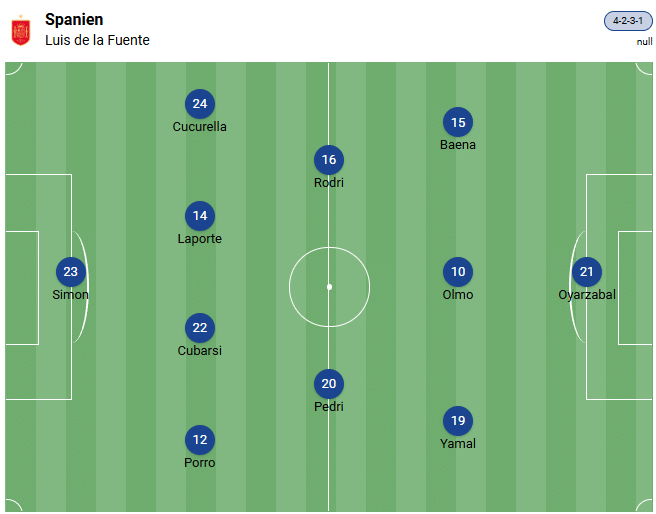
Belgium – Statistics & Current Form
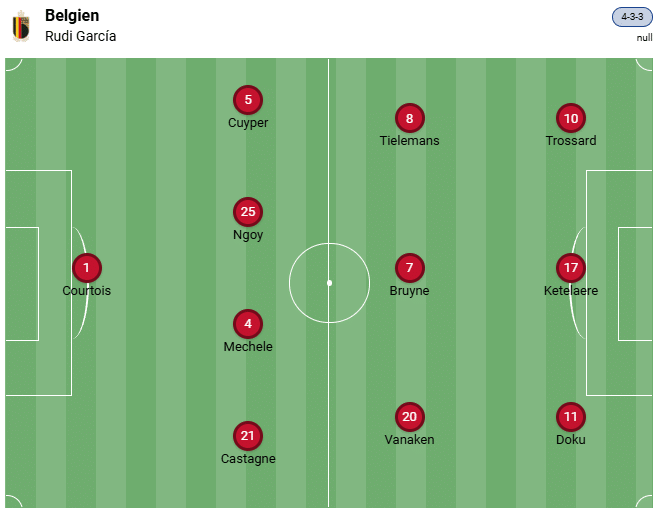
The Belgian team is harder to read. Their first tournament matches against Egypt and Iran felt like old problems in new packaging: plenty of technical quality, plenty of possession, but little pace in the middle and not enough cutting edge. Against New Zealand, the team then exploded with five goals.
Against Senegal, the Red Devils nearly bowed out of the 2026 World Cup. Against the U.S., Rudi Garcia suddenly saw a clear and determined performance from his team. The win over the U.S. may have been the turning point of this tournament for Belgium; Kevin de Bruyne and Romelu Lukaku started on the bench—bringing new energy to the field.
Nicolas Raskin gave the midfield more control. Youri Tielemans played with greater responsibility. Leandro Trossard remained the most consistent creative player. And Charles De Ketelaere played as if Belgium had been waiting for exactly this version of him. He’s not a classic Lukaku replacement, but he’s more agile, fluid, and better at playing between the lines. De Ketelaere successfully silenced the growing criticism over his lack of goals and assists against the U.S. with two goals and an assist.
From the Old Generation to New Freedom
Perhaps this very approach is the best option for Rudi Garcia. De Ketelaere makes the Belgian team’s attacking play less predictable. The 25-year-old can open up individual situations and is less reliant on a dominant style of play.
And that leaves Lukaku in the role of a substitute. He is no longer automatically the starting point of Belgium’s attack, but has become more valuable as a super-sub. When Spain gets tired, when crosses come in, when Belgium puts more players in the box in the final 20 minutes, Lukaku can still change the game.
Can he also shift the bookmakers’ Spain vs. Belgium odds?
He did that against Senegal. He did that against the U.S. And he’s likely to do the same in the matchup against the favored Spanish team. Currently, his average stands at 1.35 goals per 90 minutes. If the powerful striker takes the field during the match, he’ll be looking for assists from Leandro Trossard—who is the best expected playmaker in the entire tournament when it comes to open play (2.17 open-play xA).
Spain – Belgium Head-to-Head Record
Twelve of the 23 head-to-head matches between Spain and Belgium have resulted in an Iberian victory. Most recently, La Furia Roja has celebrated five consecutive wins—four of them without conceding a goal.
In this matchup, the Red Devils must decide how much support Maxim De Cuyper receives on his side. Will he defend Lamine Yamal on his own, or will he consistently receive additional help? The balance will be crucial—too much support means too much space for the reigning European champions’ other top players.
Spain vs. Belgium Prediction
In the heart of the field, Spain’s perhaps strongest asset faces Belgium’s biggest unknown. Rodri, Pedri, and Olmo can gradually take control of games through possession. Belgium has enough quality with Tielemans, Raskin, and Vanaken, but without Amadou Onana, they lack additional physicality and control of space.
If Belgium becomes too passive there, it creates a matchup where the Red Devils end up chasing the ball. If they overcompensate and press too aggressively, gaps will open up. This is precisely the area the Spaniards love to exploit.
For the Belgian team, the key lies less in long periods of possession than in specific moments: second balls, crosses, set pieces, and counterattacks following Spanish attacks down the flanks. However, Spain has conceded very little so far, allowing just 0.30 expected goals per 90 minutes 1. Unai Simon has had to make only six saves—on average, against an extremely low quality of opponent chances at 0.05 xGA per shot 1.

