


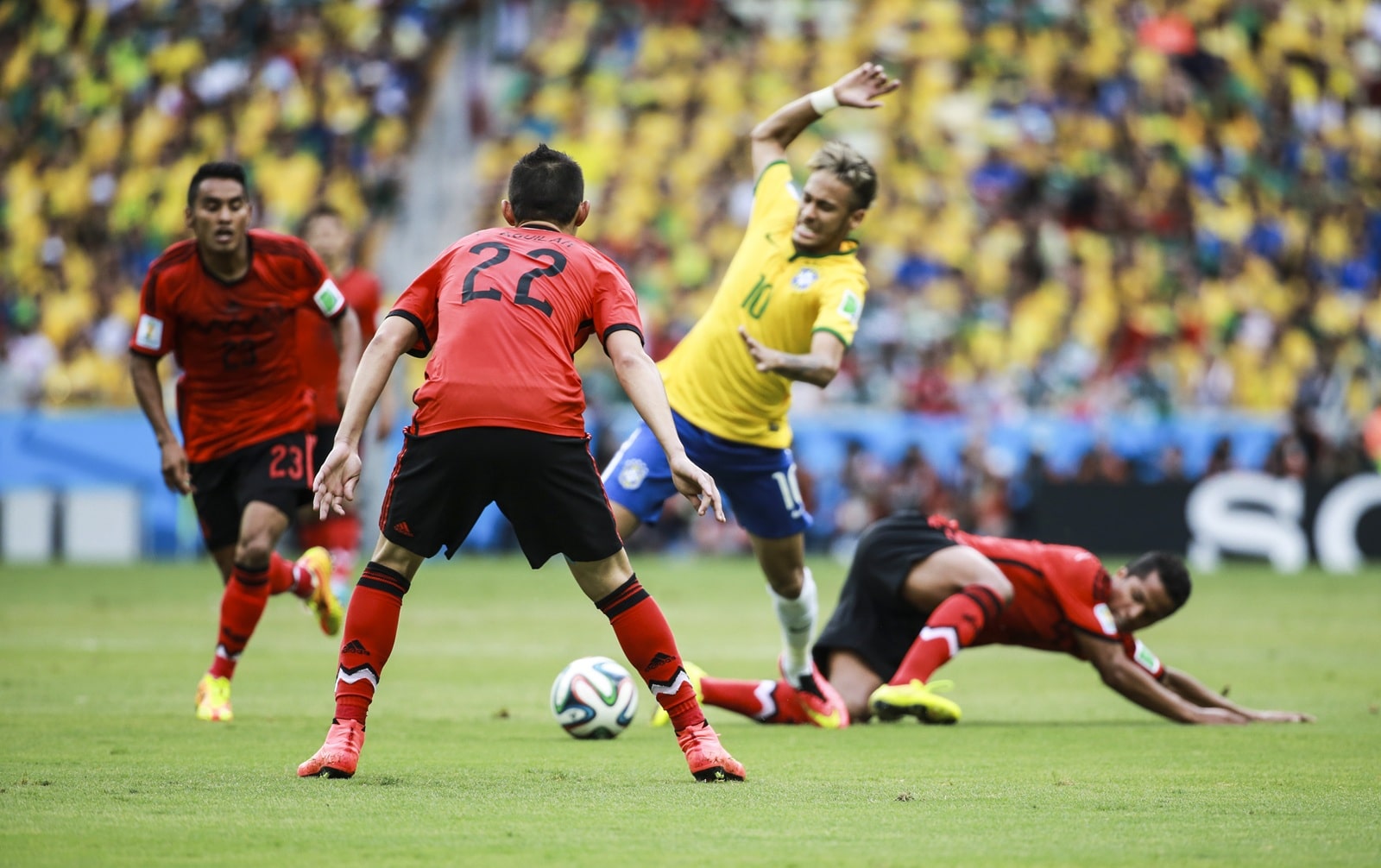
Is South Korea’s back three shaky?
Two nations that won their opening matches will face off in the Mexico vs. South Korea match to battle for the top spot in Group A. Both the top World Cup betting sites and AI analyses name the co-host as the favorite in this matchup. It certainly won’t be easy for Coach Javier Aguirre’s squad—that much we can already reveal at this point regarding our Mexico vs. South Korea prediction.
The Mexican team’s match was also fueled by a fantastic atmosphere from the home crowd. Julian Quinones scored early, and Raul Jimenez added another in the second half. However, the match against South Africa was also marked by three red cards—two of them against Bafana Bafana.
The South Korean team faced tougher resistance on the first matchday. Hwan Myung-bo’s squad fell behind after a long throw-in but remained composed. With 61.7 percent possession, the East Asian side took control and turned the game around thanks to Hwang In-beom and substitute Oh Hyeon-gyu.
According to our Mexico vs. South Korea prediction, the match in Guadalajara will be the group’s first real test of strength: Mexico relies heavily on direct and physical play, while South Korea primarily relies on possession, the technical skills of its players, and the threat of counterattacks.
Mexico vs. South Korea AI Prediction
The co-hosts’ status as favorites is confirmed by the calculations of our artificial intelligence. Based on several thousand simulations, El Tri scored an average of 0.44 more goals than their East Asian challenger. Furthermore, the Mexico vs. South Korea AI prediction revealed another interesting insight: 48.5 percent of the matches featured more than two goals. Combined with El Tri’s status as favorites, “Mexico Over 1.5 Goals” is a worthwhile bet.
Mexico – Statistics & Current Form
As co-hosts, El Tri automatically qualified for the World Cup finals—and that in itself brings a unique pressure that can become a particular burden. Without a lengthy qualifying campaign, the team lacked the grueling rhythm of competition.
At the same time, the pressure to perform is enormous. Mexico doesn’t just want to make it past the group stage; it wants to finally banish the old World Cup ghost: The team hasn’t reached a World Cup quarterfinal since 1986, also on home soil.
Javier Aguirre was brought back to provide stability and character. His style of soccer is goal-oriented and straightforward.
Indeed, intensity and competitive toughness define his teams’ style of play. Aguirre wants a team that’s tough to play against, takes on challenges, transitions quickly, and maintains a presence in key areas. This was already evident in the opener, which we’ll naturally factor into our analysis for the Mexico vs. South Korea match.
The Winger as the Key
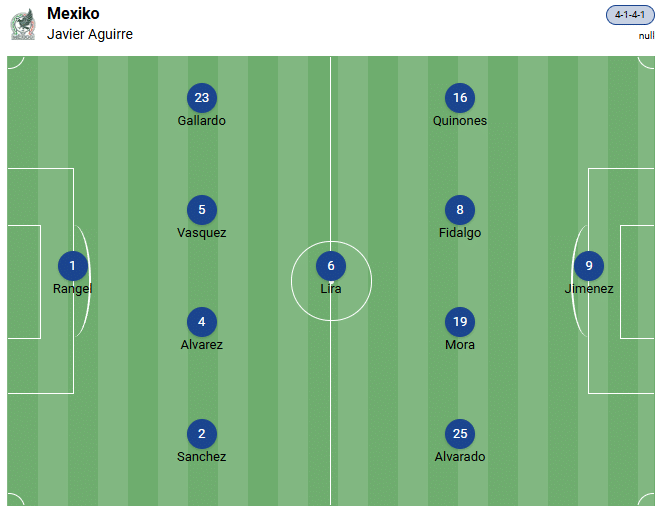
Neither flashy nor overly elaborate, but rather determined, aggressive, and virtually impervious defensively—that sums up the key elements of Mexico’s victorious opening match. The basic formation is usually a 4-3-3, which can shift to a 4-1-4-1 or 4-2-3-1 depending on the phase of play. The key is always maintaining balance behind the ball.
Mexico aims to create pace and depth down the wings. Jesús Gallardo can push far forward on the left, while the wingers move into the center or look to create one-on-one situations. Roberto Alvarado, Alexis Vega, Julián Quinones, and Brian Gutiérrez provide Aguirre with a variety of playing styles.
From direct dribblers to hard workers in defensive situations, every type of player is represented. Quinones stood out more than anyone else, taking five shots, completing five successful dribbles, and scoring the early opening goal. It seems as though El Tri has successfully carried its strong form from the start of the calendar year into the home World Cup. This confirms the picture painted by the bookmakers’ odds for the match between Mexico and South Korea.
South Korea – Statistics & Current Form
Since the start of the year, the Mexicans have won seven of their nine international matches and avoided any defeats. El Tri even managed to avoid defeat against Portugal (0–0) and Belgium (1–1). South Korea, on the other hand, headed into the 2026 World Cup with doubts.
Although their qualifying campaign was dominant—16 games, no losses—the months leading up to the World Cup were complicated. Coach Hong Myung-bo was under public pressure; his return to the position was controversial, and the tactical switch to a back three looked shaky in friendly matches.
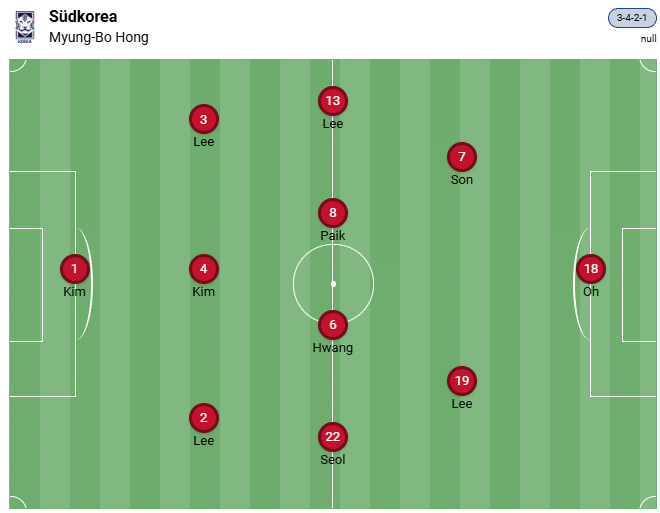
In particular, the 0–5 loss to Brazil, the 0–4 defeat to Ivory Coast, and the 0–1 loss to Austria had fueled those doubts. In their match against the Czech Republic, however, the Tigers of Asia showed a much better version of themselves. Here, too, the team played in a 3–4–3 formation, but this time their possession looked much more organized.
Will they find the right passing angles?
South Korea found a solid structure in possession right from the start. Players opened up passing lanes for one another through smart runs, and the half-spaces were occupied and exploited more effectively. Unfazed by falling behind, the ball moved smoothly through their own ranks during many phases of play.
The 468 successful passes marked South Korea’s highest total in a World Cup match since records began in 1966. This is a remarkable sign that has highlighted the technical skills of the individual players.
Despite the opening victory, however, the question remains: How stable is South Korea’s back three really against an opponent that attacks the flanks more directly and aggressively? Against the Czech Republic, the main focus was on defending set pieces and long throw-ins. Now other challenges await—especially for the wingbacks.
Mexico – South Korea Head-to-Head Record
There have been 15 matches between Mexico and South Korea so far. A total of 57 goals were scored in these matches (33–24 in Mexico’s favor).
The last two meetings took place as part of friendly matches. Both games featured several scoring chances, with four goals (2–2) and five goals (a 3–2 win for Mexico) scored, respectively.
Mexico vs. South Korea Prediction
This match is likely to unfold differently than the opening games. Mexico will face more resistance in the center, while South Korea will have to deal with more pressure on the wings. Both teams have good reasons not to get too carried away. With three points already in hand, a draw would not be a bad result for either side.
But both teams also know that a win would open the door to the next round. Mexico will likely try to disrupt South Korea’s build-up early on through intense one-on-one battles. If El Tri push the group’s second-place team deep into their own half, South Korea could face similar problems to those they encountered before the World Cup.
However, if the Taeguk Warriors manage to overcome the Mexican pressure, players they’d rather not give any space to will be left with too much room to operate. A key battle could unfold on Mexico’s left flank. Gallardo likes to push high up the field—but South Korea can pose a threat there with Lee Kang-in, a wingback cutting inside, or Son in the half-space. On the other hand, El Tri is missing an important defender in the suspended Montes, which makes defending against crosses and diagonal runs more challenging.

