


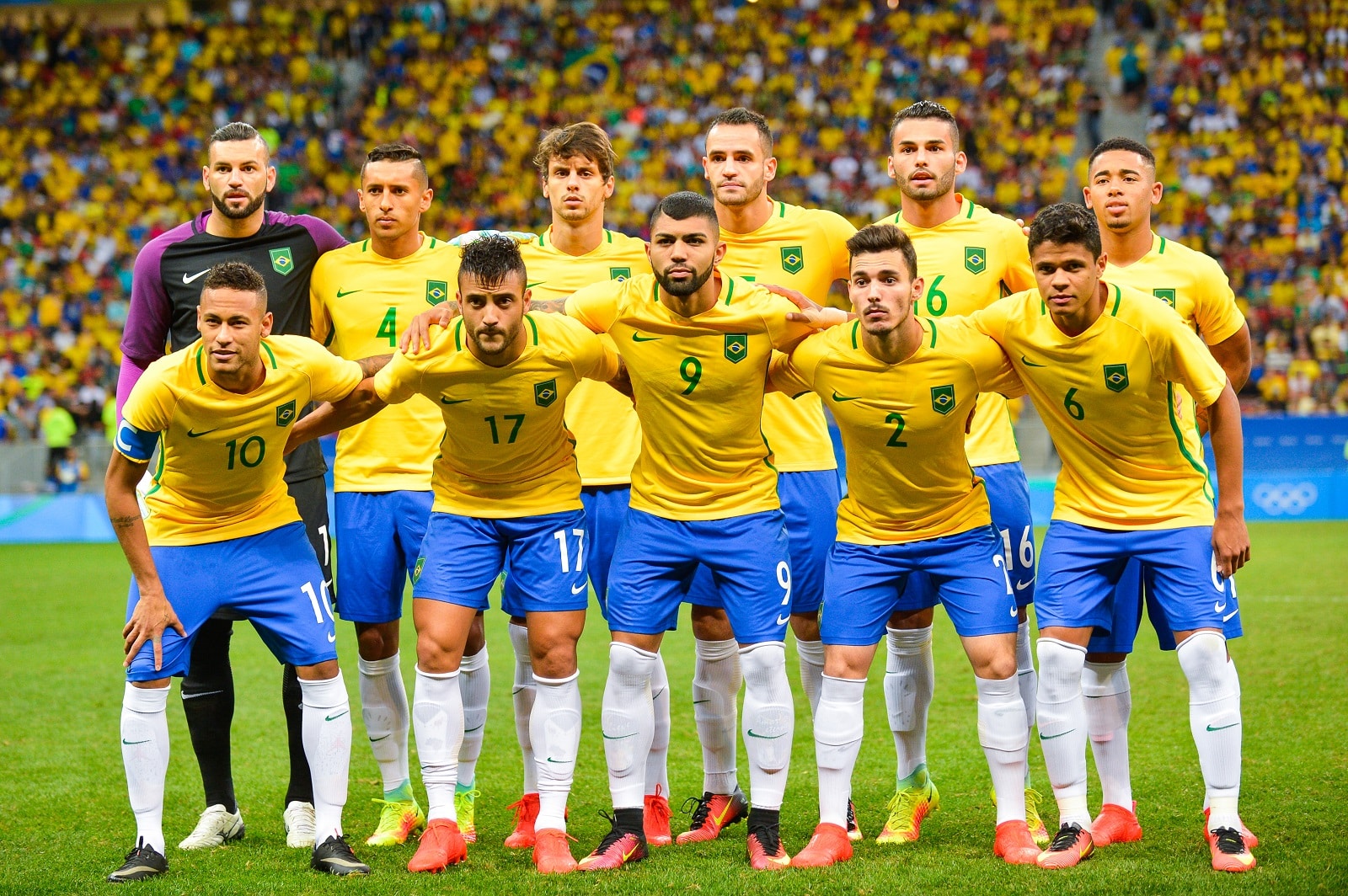
Will Japan Avoid Turnovers in Critical Zones?
Actually, this Brazil vs. Japan prediction is coming a bit too early. This Round of 16 match feels more like a quarterfinal. At least that’s the impression we get from our Brazil vs. Japan forecast: One team that should have stayed in this tournament longer is about to be eliminated.
Japan is perhaps the most dangerous team Brazil could have drawn at this stage. Not because the Samurai Blue have more stars, but because they know exactly who they are. Hajime Moriyasu’s team is well-coordinated, flexible, and disciplined in their spacing.
Furthermore, the Asian representative is quick-thinking and bold enough not to back down even against big opponents. They came back twice against the Netherlands. They beat Tunisia 4–0. A 1–1 draw against Sweden was enough to secure second place in Group F—and once again, it became clear just how difficult Japan is to contain.
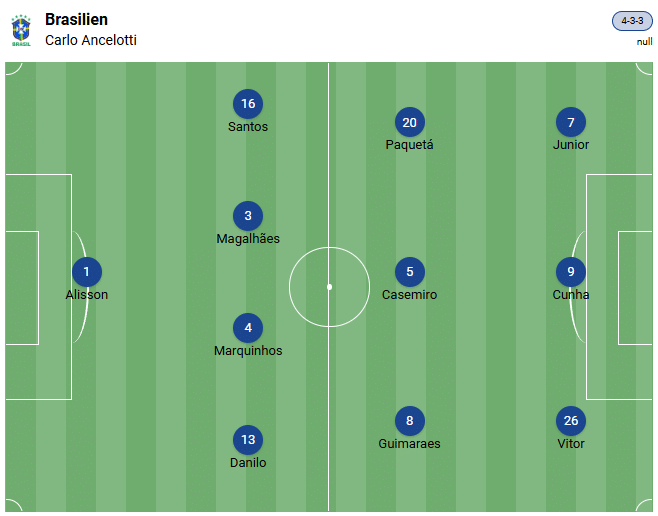
On paper, Brazil’s group stage looks like a familiar World Cup story. Carlo Ancelotti is through to the knockout stage, and his star players are shining. The record-holding world champions got off to a mixed start in this World Cup. Despite fears, they avoided having to face the third-place teams from each group. Brazil got into gear and raised expectations in the process.
But this Seleção isn’t the Seleção of our imagination. It’s not that team that makes the ball dance until the opponent can only watch from behind. Ancelotti’s Brazil is more sober, edgier, more Italian.
Brazil vs. Japan AI Prediction
Artificial intelligence rates Brazil as the favorite by a similar margin and gives the Seleção a 56 to 57 percent chance of walking off the field as the winner. However, the difference in the calculated expected goals isn’t huge—Carlo Ancelotti’s squad holds a lead of just 0.78 xGD. Similarly, the Brazil vs. Japan AI prediction indicates a probability of just under 54 percent for “Both Teams to Score – No.” Combined, this presents a viable value bet on “Brazil to Win to a Clean Sheet.”
Brazil – Statistics & Current Form
Carlo Ancelotti has never tried to force Brazil into a nostalgic mold. His approach is pragmatic. This team doesn’t always have to play beautifully; it has to win games. It must be able to defend deep, press high, transition quickly, and force mistakes.
Defending set pieces is a major priority, as is showcasing exceptional individual players. The Italian coach is less interested in a clear, rigid identity than in the ability to play multiple games within a single match.
That’s exactly what the group stage has shown. In their opener against Morocco, Brazil wasn’t yet convincing. The 1-1 draw was a real test—perhaps the only one at this level so far. Morocco had more expected goals (1.33 xG) and more ball progressions. Brazil still seemed to be finding its footing, not quite in balance yet.
Wish Meets Reality
Against Haiti, the result changed, but not necessarily the approach. Brazil won 3–0, even though the numbers didn’t reflect total dominance: 49 percent possession, just seven shots on goal, 1.42 xG. Haiti also had seven shots on goal, but only 0.26 xG. The quality of Brazil’s chances was the deciding factor.
Matheus Cunha scored twice, and Vinicius Junior provided the assist. Raphinha had to leave the game due to injury, but the Seleção didn’t fall apart. Ancelotti’s team didn’t just sit back—they waited for the right cracks to appear in the opponent’s formation. Against Scotland, this became a clear pattern. The 3–0 win in Miami was Brazil’s most mature performance to date.
21 shots, 3.78 xG, nine shots on goal, and 139 touches in the attacking third. And yet, once again, the key lay not in classic sustained possession, but in pressing. Once again, that came from Vinicius Junior. The 25-year-old is finally living up to his role in the Seleção jersey, has five direct goal contributions, and is the decisive factor in the team’s offensive play—exactly as Carlo Ancelotti envisioned. It’s only logical that Brazil is considered the favorite to win against Japan.
Japan – Statistics & Current Form
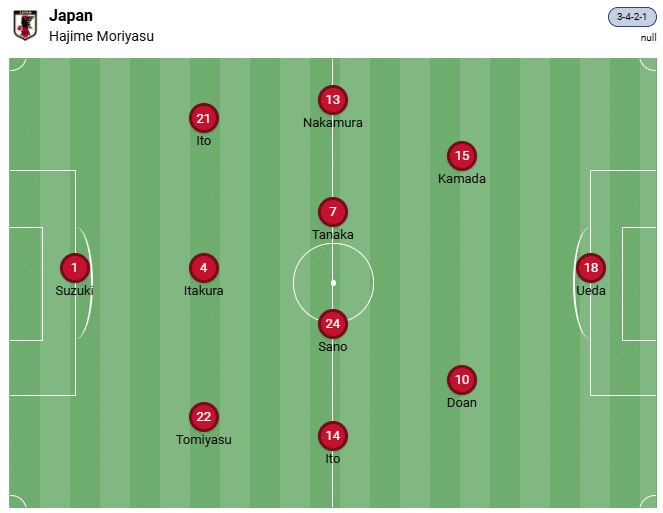
Japan didn’t make it this far in the tournament by accident. Moriyasu’s team is one of the most well-defined sides in the World Cup. They usually play a 3-4-3 formation, with wingbacks who can push forward, cut inside, link up, and finish. Their offense relies less on a single focal point and more on interplay. With players who have been reading the same spaces for years.
The 2-2 draw against the Netherlands was an early statement. Japan had only 37.4 percent possession but registered 316 defensive pressures and, despite falling behind twice, managed to come back late in the game. Nakamura scored off an assist from Kubo, and Daichi Kamada netted the late equalizer off a corner kick. The xG numbers were low, but that reflected the nature of the game.
The Samurai Blue don’t need a lot of chaotic moments to be dangerous. They need clear, well-executed plays. A 4-0 win over Tunisia followed, setting a record: never before had an Asian team scored four goals in a World Cup match. Ayase Ueda scored twice, Kamada netted Japan’s fastest-ever World Cup goal early on, and Junya Ito finished off an attack that began deep in their own half.
Teamwork is their strength
Finally, the 1–1 draw against Sweden was less spectacular, but perhaps particularly revealing. In a match that looked for a long time like a stalemate, Japan finally found the solution after the break. Ritsu Doan used Ayase Ueda as a wall pass. Doan found Daizen Maeda with a perfect through ball. A goal that seemed almost too clean to be a fluke.
That is precisely where the Samurai Blue’s strength lies: they can suddenly open up passing lanes from tight, seemingly harmless situations that the opponent recognizes a step too late. The tournament statistics also highlight their depth. Japan has had ten different players involved in goals at this World Cup—tied with Germany for the highest total.
Furthermore, they are a tough opponent defensively.
Against the Netherlands, Japan defended in a deep block during 50 percent of the opponent’s possession phases. That sounds deep, but it wasn’t passive. Japan can direct the opponent into specific zones, tighten up the wings, and then play quickly forward. Although the Brazil vs. Japan odds signal an underdog role, it would therefore be fatal for the Brazilian favorites to underestimate the underdog. It’s no coincidence that only three nations have allowed fewer expected goals per game than Japan (0.49 xGA/90) so far.
Brazil – Japan Head-to-Head Record
Neymar is back in action, and that’s likely to be a huge boost for Selecao fans with a keen sense of history. No other player has scored more goals in previous head-to-head matches than the attacking midfielder (9). Of the 14 head-to-head matches, Brazil has won eleven—though the record-holding world champions lost a friendly 2–3 last October. Never before have the Samurai Blue defeated the South American side. Should the prediction of a Japanese victory between Brazil and Japan come true, this would mark a first.
Brazil – Japan Prediction
Many questions revolve around whether Japan can avoid precisely the mistakes that Brazil thrives on. Ancelotti’s team has scored a striking number of goals in the group stage from ball recoveries, high-pressure situations, or opponent errors. Scotland felt the brunt of this. So did Haiti.
Morocco was the opponent that best resisted this pattern—and Brazil promptly appeared less dominant. Japan is technically and collectively strong enough to disrupt the Seleção’s rhythm. The back three of Hiroki Ito, Shogo Taniguchi, and Tsuyoshi Watanabe, coupled with a goalkeeper like Zion Suzuki—who is bold and quick to react—can weather periods of pressure.
Brazil enters this match as the favorite. Because of Vinicius Junior. Because of Carlo Ancelotti. Because of the individual talent. Because of the momentum that builds once this team takes the lead. But Japan is no easy opponent. Not for Brazil. Not for anyone.

