


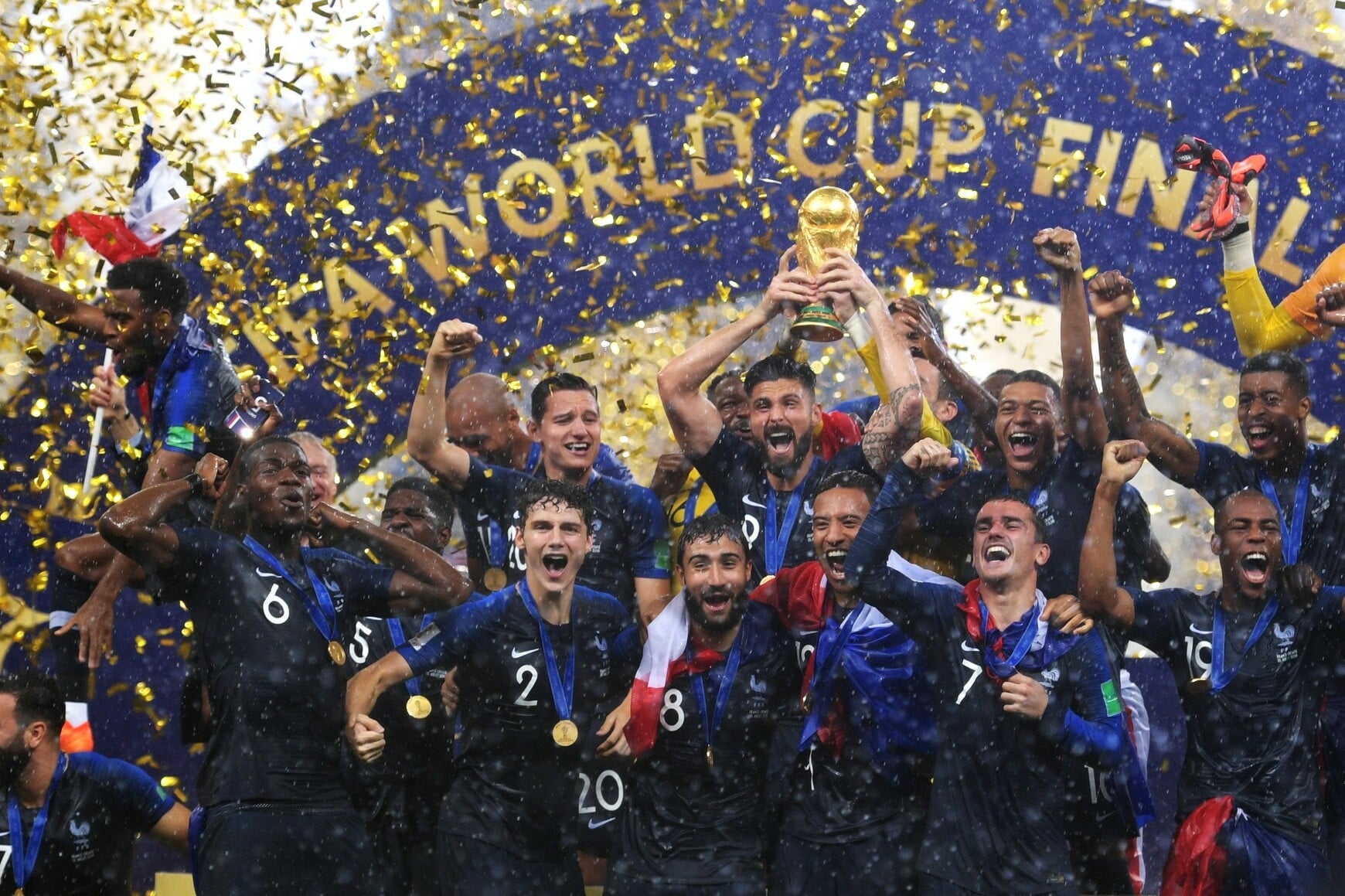
What game plan will Graham Potter choose?
Ten goals, three wins, and two superstars with four tournament goals each: the French national team’s group stage performance points to some positive momentum. The Tre Kronor advanced to the knockout stage as the second-best third-place team in their group. Even without Les Bleus’ recent form, the Blagult would have received a poor initial assessment from us in our France vs. Sweden prediction.
The 2018 world champions and 2022 finalists earned first place in the group stage, securing a matchup against one of the best third-place finishers. This matchup almost didn’t happen at all. Sweden had only managed to qualify for this tournament at the last minute via the playoffs.
Reaching the knockout stage is a bonus, but their run at the 2026 World Cup will most likely end here. The Blue-and-Yellows have shown a wide range of form so far. At times, Graham Potter’s team played brilliantly; at others, they appeared fragile; later, they were disciplined—time and again, they presented a confusing picture.
Very few defenses in the world can hold their own against a French offense featuring Kylian Mbappé, Ousmane Dembélé, Michael Olise, and Désiré Doue. We do not consider the Swedish national team to be among those nations.
Although the Blue-and-Yellows, with their highly talented individual forwards, aren’t your typical underdogs, we don’t see this matchup as being on equal footing. At Betano, we’re picking France – Sweden odds of 1.95 and betting on “France Over 2.5 Goals.”
France vs. Sweden AI Prediction
At the same time, the total number of expected goals in this matchup stands at 2.89—a strong indication of a shutout victory for Didier Deschamps and his favored squad. This aligns with the quality of chances created by Tre Kronor so far (0.07 xG/shot)—their seven goals scored are well above their expected tournament goals (4.02 xG).
France – Statistics & Current Form
After the group stage, France looks like the team everyone has to fear. Not because the Equipe Tricolore is completely flawless, but because they’ve found multiple ways to score goals. Two years ago at Euro 2024, Les Bleus often seemed heavy-footed, rigid, and almost reluctant to be creative, despite their individual talent.
There was often a heavy emphasis on defense—the flow was missing. Much of the play revolved around Kylian Mbappé, and few challenges were overcome through collective fluidity. The 2026 World Cup has told a different story so far.
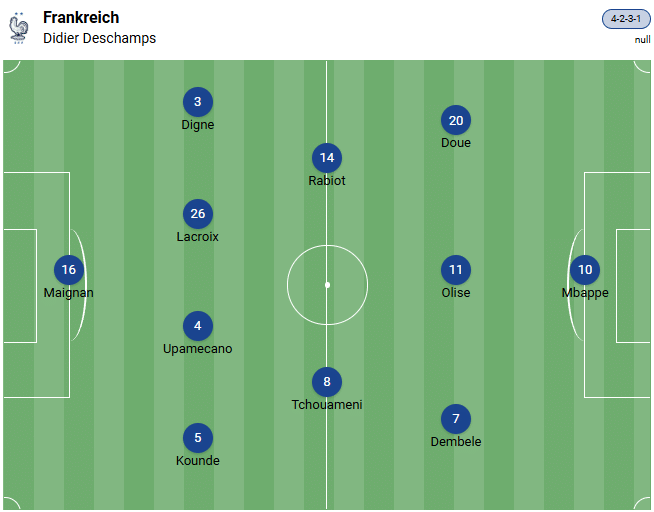
Didier Deschamps has guided his team into a 4-2-3-1 formation that appears more attacking and flexible than previous versions.
Mbappé starts as the central figure but is no longer the sole focal point. Olise can link up play and create openings. Dembélé is not just a dribbler but also a catalyst for pressing, a finisher, and a playmaker. Doue brings a mix of ball control, pace, and unpredictability. Behind them, Aurélien Tchouameni, Adrien Rabiot, or Manu Kone maintain the balance.
France has shed its sluggishness
The transformation is evident not only in the names but also in the way France applies pressure. Against Senegal, the performance wasn’t entirely convincing, but France won 54 balls through “forced turnovers,” directed eight of its eleven shots on goal, and covered a total of 120.2 kilometers.
Against Iraq, this translated into territorial dominance: 604 passes, a 92 percent pass completion rate, 117 successful line breaks, and 246 ball touches in the attacking third. The Equipe Tricolore spent nearly a third of its possession phases in the final third during this match. It wasn’t spectacular in the sense of frantic back-and-forth, but it was overwhelming.
And then came Norway. This match had actually been billed as Mbappé versus Haaland. Haaland didn’t play, Norway rotated nearly its entire lineup, and yet it still became a pivotal moment in France’s group stage. Because Dembélé exploded. Three goals in 32 minutes. The fundamental question against France was often: How do we stop Mbappé? At the 2026 World Cup, that question is more pressing than ever: What happens if we contain Mbappé and Dembélé, Olise, or Doue still decide the game?
Sweden – Statistics & Current Form
The group stage came to an end for the Swedish team amid a series of extreme swings. The Tre Kronor have remained difficult to pin down over their first three matches in this tournament. Their performances showed no clear pattern and remained hard to predict.
Things looked promising against Tunisia. The final score was 5–1. Alexander Isak scored and provided two assists. His striking partner, Viktor Gyökeres, also impressed with his presence and finishing. As a team, they found the back of the net three times from outside the penalty area.
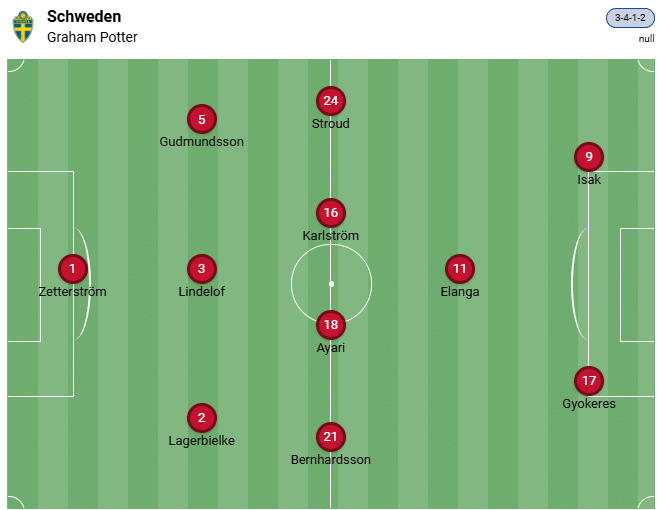
But even in that game, there were signs of the ambivalence to come. The first half had a combined xG of just 0.47—and yet three goals were scored. Sweden was clinical; Tunisia was error-prone. This was followed by a crushing defeat against the Netherlands (1–5). Potter’s 5-3-2 formation was stretched apart in the opening minutes. The problem was that the structural gaps at the start and after halftime were punished to the fullest by a high-caliber opponent. It is precisely this ability that also sets France apart.
A team with many faces
A third version of the Blue-and-Yellows emerged against Japan. Sweden mirrored the Samurai Blue’s 3-4-3 formation, defended more compactly, had clearer defensive assignments, and stayed in the game despite falling behind. Elanga’s equalizer was a long-range shot—his second goal of the tournament—and fit perfectly with Sweden’s World Cup campaign so far: not necessarily born of controlled dominance, but of individual brilliance.
Late in the game, Sweden could even have won, but Zion Suzuki made saves against Elanga and Isak. So Sweden heads into this Round of 16 match with seven goals scored, seven goals conceded, four points, a 5–1 memory in both directions, and a coach who continues to search for the best balance.
Ahead of the head-to-head matchup, Sweden doesn’t need to ask itself whether scoring goals is possible.
Isak needs little space, Gyökeres can tie up defenders physically, and Elanga brings depth and shooting power. Against France, however, the decisive factor will be how many uncontrolled moments the Swedish team allows.
France – Sweden Head-to-Head Record
In twelve of the 23 matches played between France and Sweden, the Equipe Tricolore has emerged victorious. Most recently, the French have won four of their last five encounters, losing only the 2017 return leg in World Cup Qualifying Group A (1–2). Four of Les Bleus’ six losses occurred before 1970.
France vs. Sweden Prediction
Sweden’s wing problem was evident against the Netherlands. When the Blue-and-Yellows stayed high with two strikers, they lacked pressure on the flanks. When the wingbacks dropped too deep, the Dutch were able to dribble and shift the play in front of the defense. When the center backs pushed up, channels opened up.
France is even more dangerous in these spaces than the Oranje. We can expect Graham Potter to adopt an approach more similar to the match against Japan than to the game plans against Tunisia and the Netherlands: with clear assignments and tighter spacing.
France enters this Round of 16 match as the clear favorite. Not just because of Mbappé. Not just because of history. Above all, because Deschamps has put together a team that’s currently capable of creating an unusually large number of problems all at once. Les Bleus can press (29 high ball recoveries, 7 shots, 2 goals), launch lightning-fast attacks (9 direct attacks, 2 goals), and, thanks to their individual quality, exploit even the tightest spaces.

