


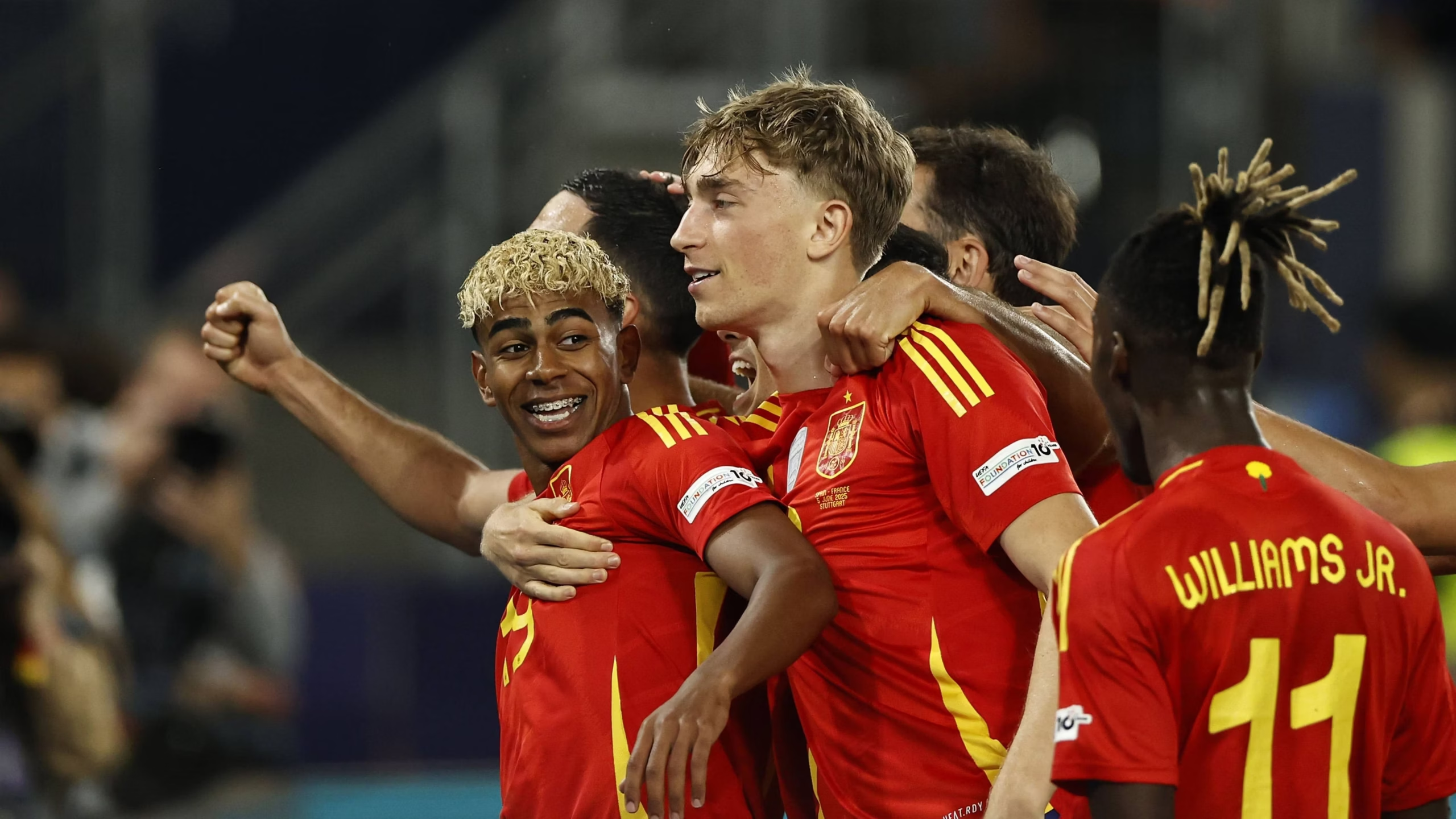
How much pressing will the Austrian national team dare to employ?
Few group stage matches tested the nerves quite like the Group J match on Matchday 3 between Algeria and Austria (3–3). Thanks to a last-second goal, Ralf Rangnick and his team can look forward to the knockout round, while we take a closer look at the Austria vs. Spain prediction.
Despite some initial struggles, Spain finished the group stage as group winners. Perhaps that’s exactly what makes them the more dangerous opponent for Austria. La Selección has already had to show different sides of itself in this tournament.
On the first matchday, spectators saw a frustrated possession machine against Cape Verde (0–0), then the unbridled favorites against Saudi Arabia (4–0), and finally a composed, methodical side against Uruguay (1–0).
Crucial for the Spanish team is the drive for verticality in their own offensive play—without, of course, losing control of the game. In turn, this raises the question of Ralf Rangnick’s chosen game plan. How much, how high, and for how long will he send his players to press?
How much resilience does the 68-year-old believe his players have during phases of deep defensive blocking? Fundamentally, we expect the Austrian national team to put up energetic resistance, even if their options for moving forward are limited.
Austria vs. Spain AI Prediction
Our artificial intelligence sets its calculated win probabilities slightly lower than the betting market in the Austria vs. Spain AI prediction. La Furia Roja remains the favorite, but after taking various metrics into account and running several thousand simulations, it only achieves a win rate of 68.4 percent.
Spain – Statistics & Current Form
In the 0-0 draw against Cape Verde, Spain had almost everything—except a goal. The statistics seemed like a true exaggeration of Spanish soccer history: endless ball circulation, a flood of passes, 27 shots on goal, and hardly any relief for the opposition. And yet, in the end, the result raised old doubts.
Can Spain generate enough pace against deep, compact opponents? Is possession still a weapon—or sometimes just possession? The answer came against Saudi Arabia with Lamine Yamal. The 18-year-old needed just ten minutes to score his first goal in his World Cup debut.
Suddenly, Spain’s attack regained both depth and width, creating havoc with recurring phases and sequences. Mikel Oyarzabal, who had been nearly invisible against Cape Verde, responded with two goals and an assist. Alex Baena brought dynamism from the left. Pedri dropped deeper and once again looked more like the player who not only participates in matches but also controls them.
The favorite searching for its form
It was Spain’s best performance of the tournament, but perhaps also the hardest to assess. Saudi Arabia was outmatched, defending without the density and consistency with which Cape Verde had previously frustrated Spain. The 1-0 victory over Uruguay was therefore almost more valuable as a barometer: less spectacular, less exhilarating, but mature.
For the third time in a row, Spain conceded almost nothing, scored the decisive goal through Baena, and saw the match through to the end. That is the quality of this team. It can overwhelm. It can accelerate. It can now also win without shining.
And yet, questions remain ahead of the Round of 16. Nico Williams has been injured again. Yeremy Pino is carrying an injury. Lamine Yamal is still being used sparingly following his muscle injury. The depth of the squad—actually a central part of Spain’s European Championship-winning DNA—is no longer quite as a given. De la Fuente must decide how much risk he’s willing to take with his wingers—and how he’ll organize the midfield. In addition, the shooting conversion rate (only 9.09 percent so far) will be decisive.
Austria – Statistics & Current Form
Austria has approached this game differently. Not through control—but rather through bursts of intensity. The 3–1 win over Jordan was a solid start. It was fueled by efficiency, intensity, and a willingness to quickly penetrate dangerous zones after winning the ball.
On the second matchday, Rangnick’s team revealed two truths at once against Argentina: Austria can find space in the final third even against top opponents, but it can also be quickly punished for their individual quality. The 0–2 loss wasn’t a complete collapse, but it was a reminder of the fine line the team is walking.
Against Algeria, that line turned into a roller coaster. Marko Arnautovic scored off a long ball from David Alaba. Marcel Sabitzer netted a spectacular goal from distance. But Algeria came back twice and even took the lead. Austria had to watch as a seemingly controlled tournament scenario turned into panic in a matter of seconds. But it was precisely out of that panic that the moment emerged which is now giving the team momentum.
An underdog with a pulse
Kalajdzic and Gregoritsch add another dimension to Austria. Neither is the type of player who will dominate Spain for 90 minutes. But they change the dynamics in the penalty area. They turn long balls, second balls, and late crosses into real scoring opportunities. In a knockout match, that’s no small feat.
Rangnick’s basic strategy remains clearer than the drama against Algeria might suggest. The ÖFB squad aims to generate intensity, seek out tackles, close down passing lanes, and immediately play vertically after winning the ball. Several valuable opportunities have already arisen from such moments. Austria generates high-quality shots on average (0.14 xG/shot) and has converted its chances at an above-average rate so far (22.22 percent conversion rate).
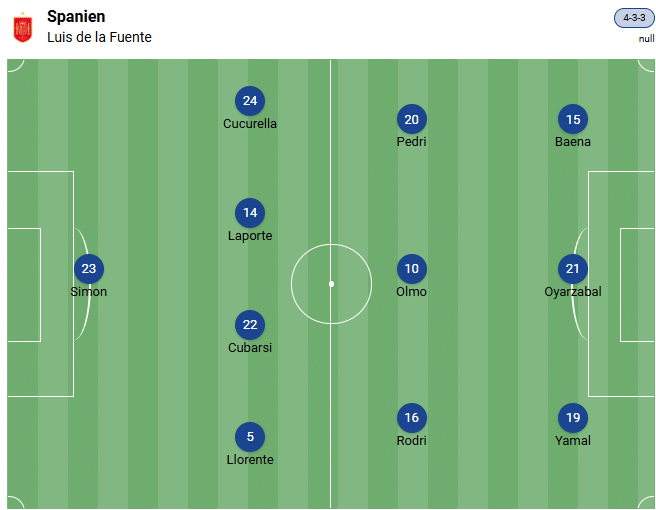
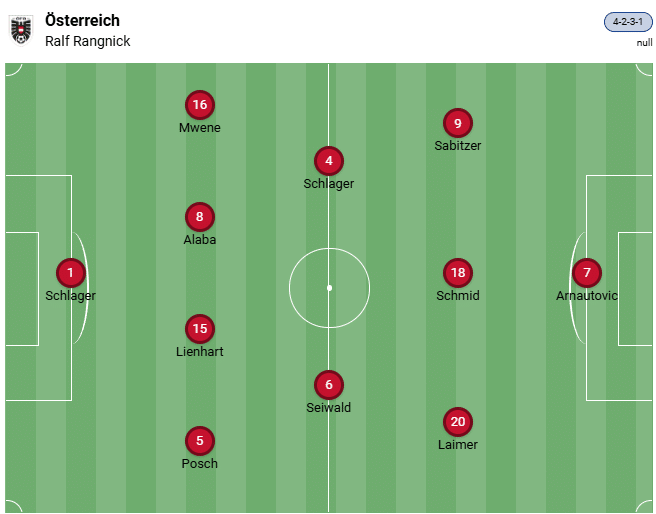
Pressing high up the field against Unai Simon, Pau Cubarsi, Aymeric Laporte, and Rodri is risky. Spain can relieve the initial pressure with just a few passes. Things get more dangerous for the favorites when Austria sets up pressing traps in the second third of the field: as soon as Rodri receives the ball, as soon as Pedri or Olmo receive it with their backs to the goal, or as soon as a fullback is isolated on the sideline.
Austria – Spain Head-to-Head Record
The last time these teams met was almost 17 years ago. Spain won a friendly match convincingly and celebrated its ninth victory in 16 head-to-head matches with a 5-1 win. The goal tally once again underscores La Furia Roja’s status as favorites (43:22). However, the Spanish team is considered stronger now than it was nearly two decades ago.
Austria vs. Spain Prediction
Spain has been extremely solid defensively so far. No other nation in this World Cup has conceded fewer expected goals than La Selección (0.18 xGA/90). Unai Simon hasn’t had to stop any major scoring chances or opponent shots yet.
On average, opponents have created only 0.04 xGA per shot against the reigning European champions. If Spain establishes the desired structure in the Round of 32 and circumvents the ÖFB team’s pressing sequences, Luis de la Fuente’s squad could record its fourth consecutive shutout.
For Spain, the key will be to take the game out of the emotional realm early on: possession, positional play, composure, and ideally an early goal. Austria aims to do the opposite: disrupt the rhythm, win duels, and remind the favorites of their own impatience. Both teams bring legitimate strategies to this match and can ensure an entertaining evening.

